Let’s Innovate for Water.
Let’s Create Impact
Date: 8 May 2026
Venue: TTJ Auditorium, IC&SR, IIT Madras, Chennai
The third edition of the Stockholm Junior Water Prize India concluded successfully at IIT Madras, bringing together some of the brightest young water innovators from across the country to compete for the title of National Water Champion. Organised by the School of Sustainability, IIT Madras, in partnership with AquaMAP and the Stockholm International Water Institute (SIWI), the event celebrated innovation, sustainability, and youth-driven scientific solutions addressing India’s growing water challenges.
The Grand Finale featured participation from Indian states. The finalists presented innovative solutions in atmospheric water harvesting, AI-driven water management, plant-based nano-filtration, passive hydraulic engineering, and household greywater recycling.
The event was attended by distinguished dignitaries including Mr. T.M. Vijay Bhaskar IAS (Retd.), Former Chief Secretary of Karnataka; Dr. S. Kannappan, Director of School Education, Government of Tamil Nadu; and Mr. Muthu Sudhan Gomathinayagam, Head of Sustainability Ecosystem at TCS Consumer Business Group.
ESTEEMED JURY PANEL
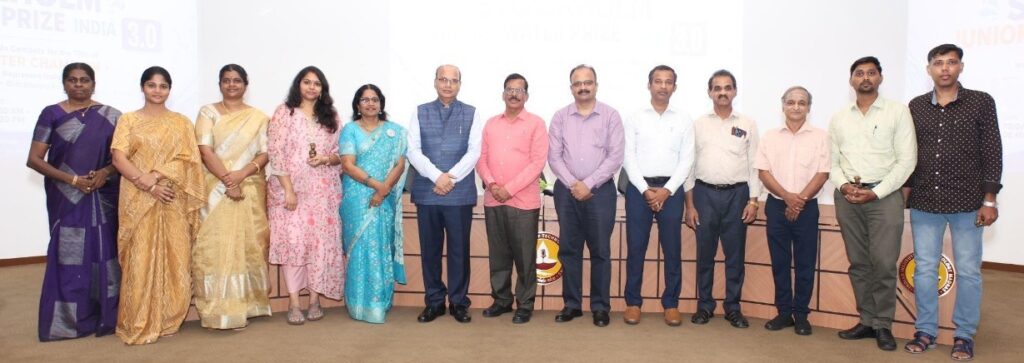
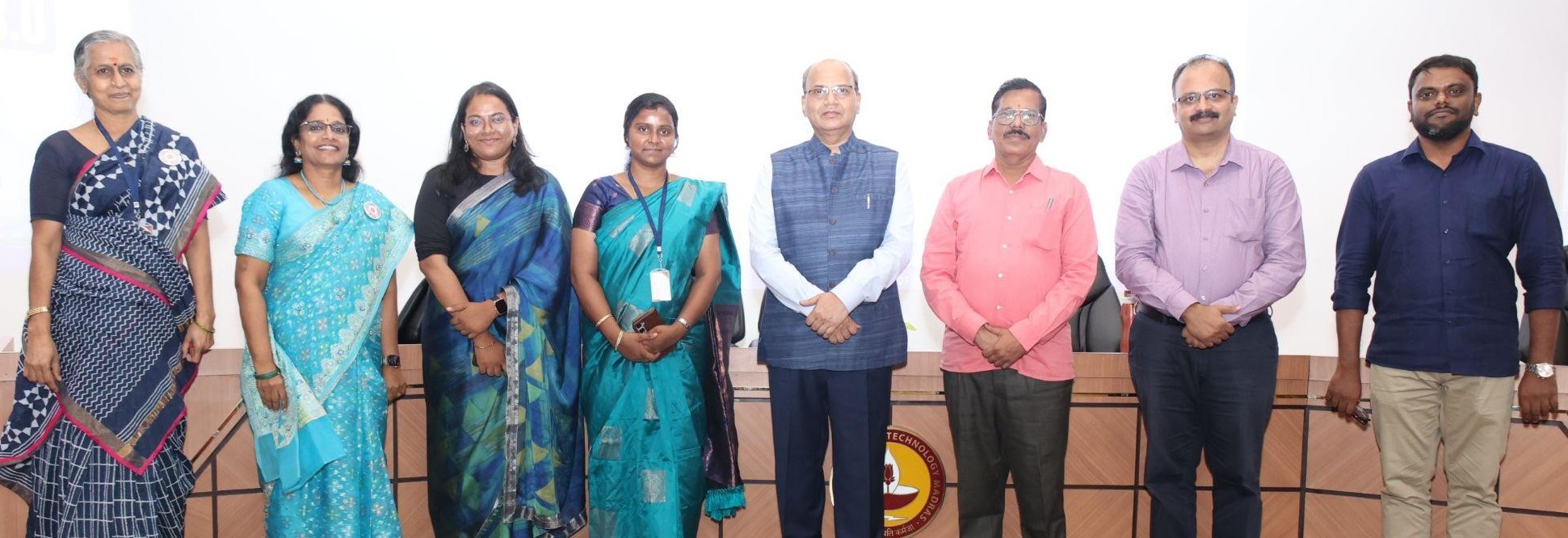
The projects were evaluated by an eminent multidisciplinary jury panel comprising experts from academia, sustainability, water technology, urban governance, and industry.
- V. V. Raghavendra Sai
Associate Professor, Department of Applied Mechanics - Pandian Ganesh Kumar
Larsen & Toubro – Water Technology - Chandrasekaran Jeyaraman
Founder & Director, Watsan Envirotech Pvt. Ltd. - S. Vishali
Head of Department, Chemical Engineering, SRM Institute of Science and Technology - Pavithra
Xylem Inc. - Uvraj
Xylem Inc.
- P. Jegathambal
Water Institute, KITS Coimbatore
DAAD Research Ambassador, India - Nisha Priya Mani
Greater Chennai Corporation / Asian Development Bank - K. Palanivelu, PhD, DSc
Director, Centre for Climate Change and Environment (CCCE) - John Britto
Doctoral Researcher, Karunya Institute of Technology and Sciences
The jury evaluated the projects based on innovation, scientific rigour, sustainability impact, scalability, technical feasibility, and societal relevance.
WINNERS
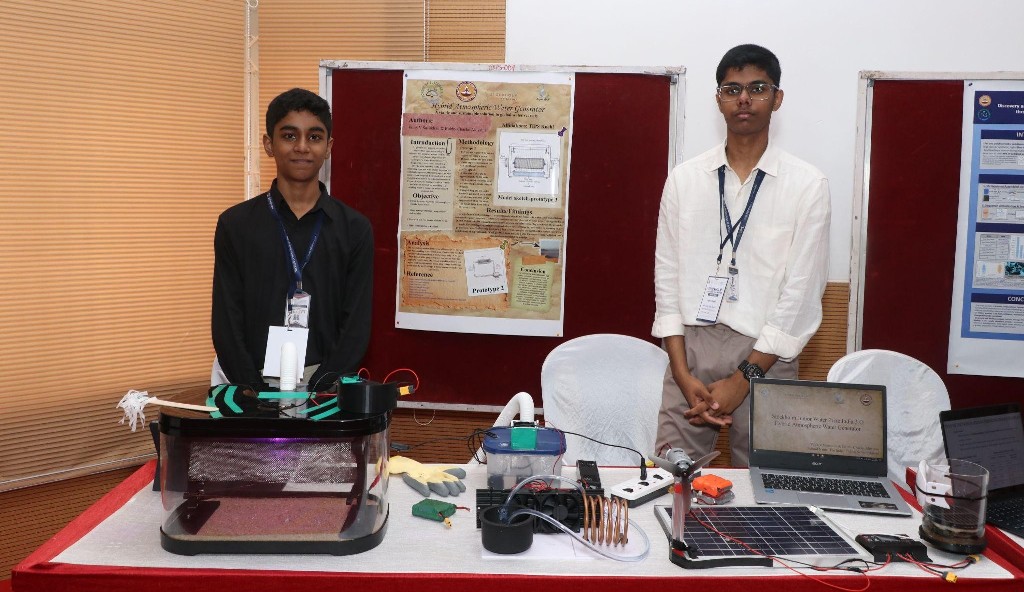
FIRST PLACE — NATIONAL CHAMPIONS
Hybrid Atmospheric Water Generator
Vilok V Sasindran & Bobby Chacko Aloysius
The Indian Public School, Kochi, Kerala
Vilok V Sasindran and Bobby Chacko Aloysius emerged as the National Champions of Stockholm Junior Water Prize India 3.0 for their project titled Hybrid Atmospheric Water Generator.
Their innovation is a renewable-energy-powered atmospheric water generation system capable of harvesting moisture from the air and converting it into purified drinking water. The prototype combines solar and wind energy with a vapour-compression refrigeration cycle and dual evaporator coils to maximise atmospheric condensation.
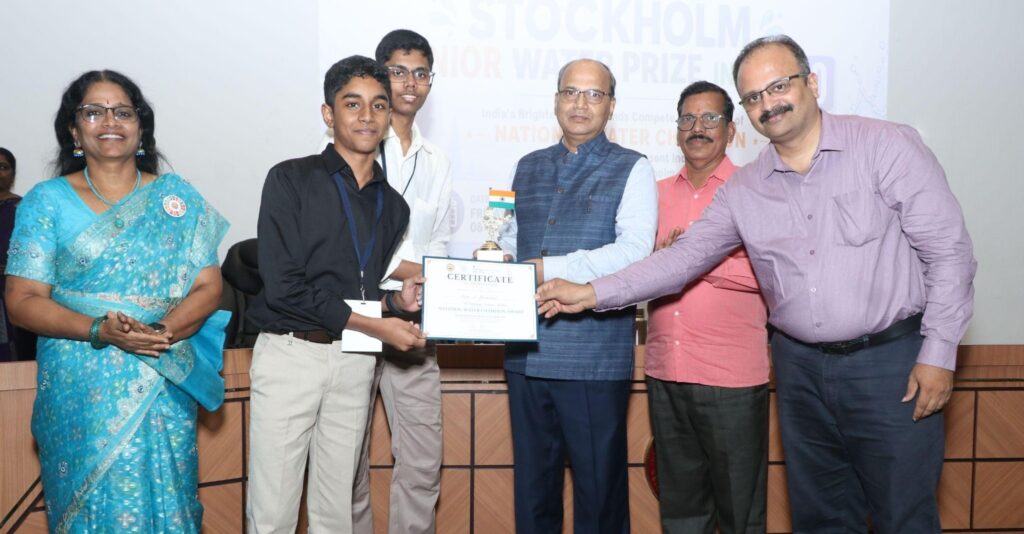
The system also incorporates a three-stage purification process consisting of sediment filtration, activated carbon filtration, and UV-C sterilisation with mineralisation. The current prototype produces approximately 0.5 litres of potable water per hour, with future scalability planned for larger systems capable of producing nearly 200 litres per day under tropical conditions.
As National Champions, the team will represent India at the Stockholm Junior Water Prize International Finals during World Water Week in Stockholm, Sweden.
THIRD PLACE
Aqua Sattva — Plant-Based Dual Filtration Sachets
Naina Singh & Nayantara Singh
Step by Step School, Noida, Uttar Pradesh
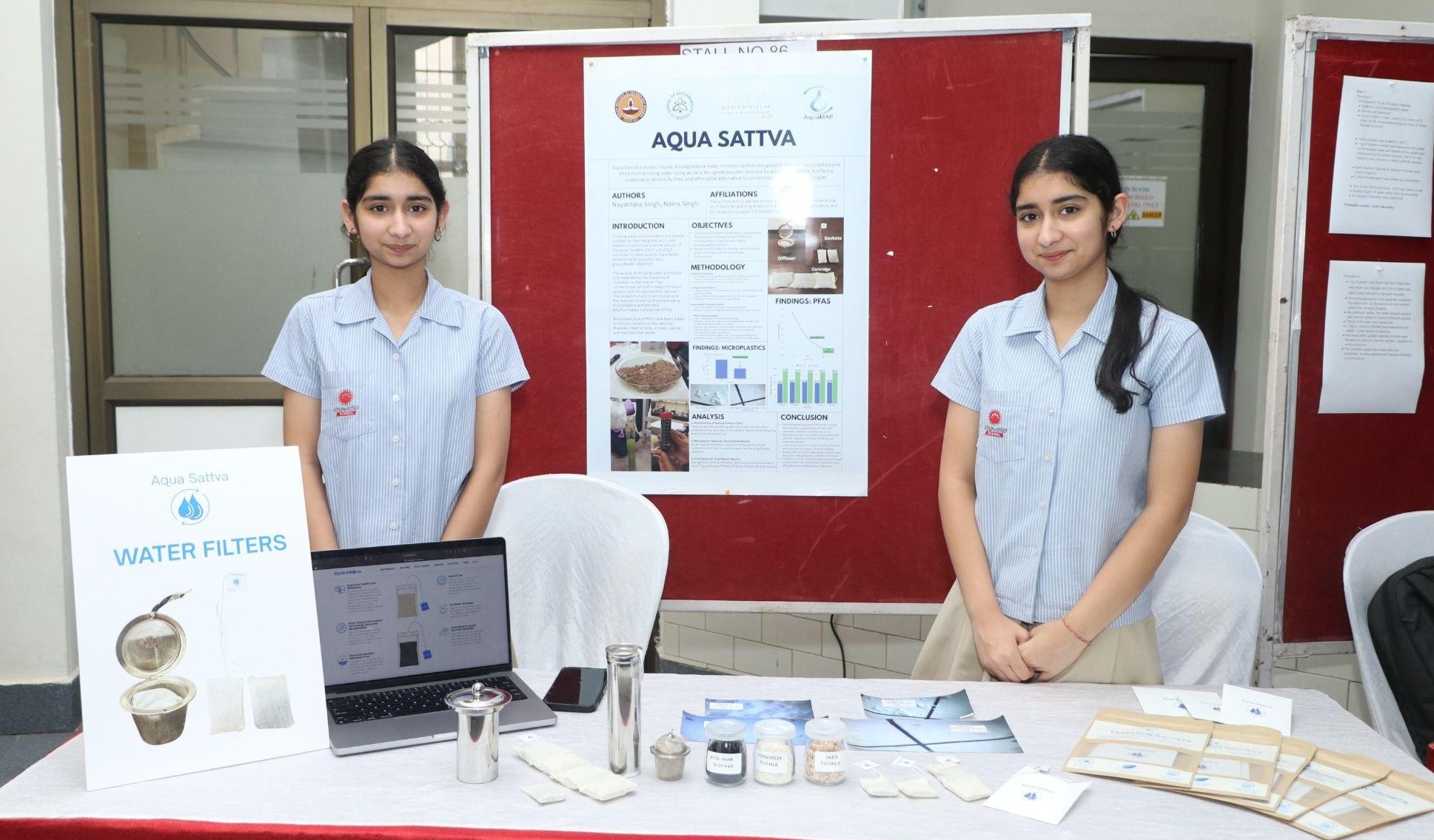
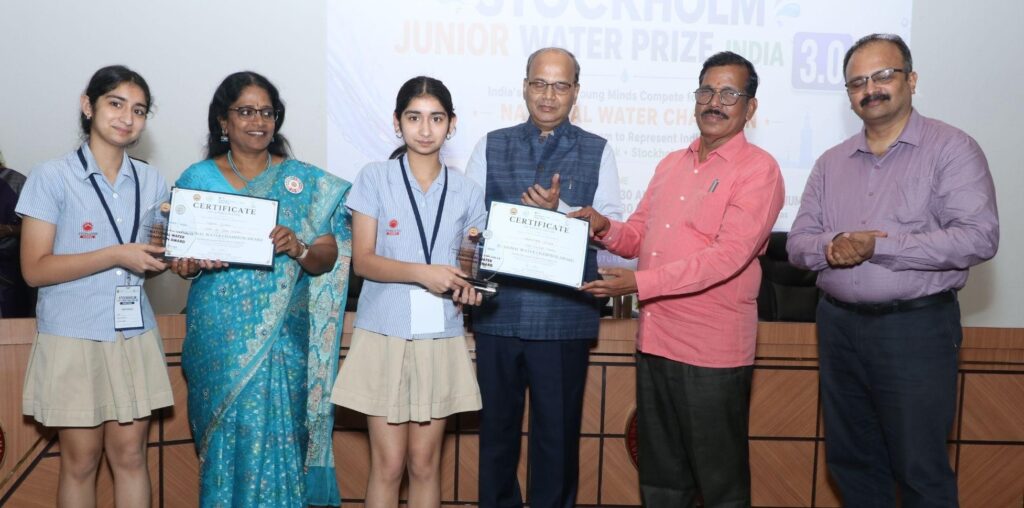
Naina Singh and Nayantara Singh won third place for their project Aqua Sattva, an eco-friendly filtration solution designed to remove microplastics and PFAS contaminants from water. The innovation uses biodegradable filtration sachets made from plant-based materials including okra-fenugreek polymer blends and rice husk biochar. The solution requires no electricity, generates minimal waste, and is designed to remain affordable and accessible for large-scale community use.
SECOND PLACE
VarunNetra — AI-IoT Urban Water Management System
Raaghav Aggarwal & Gokarn Suri
DPS Greater Faridabad, Haryana
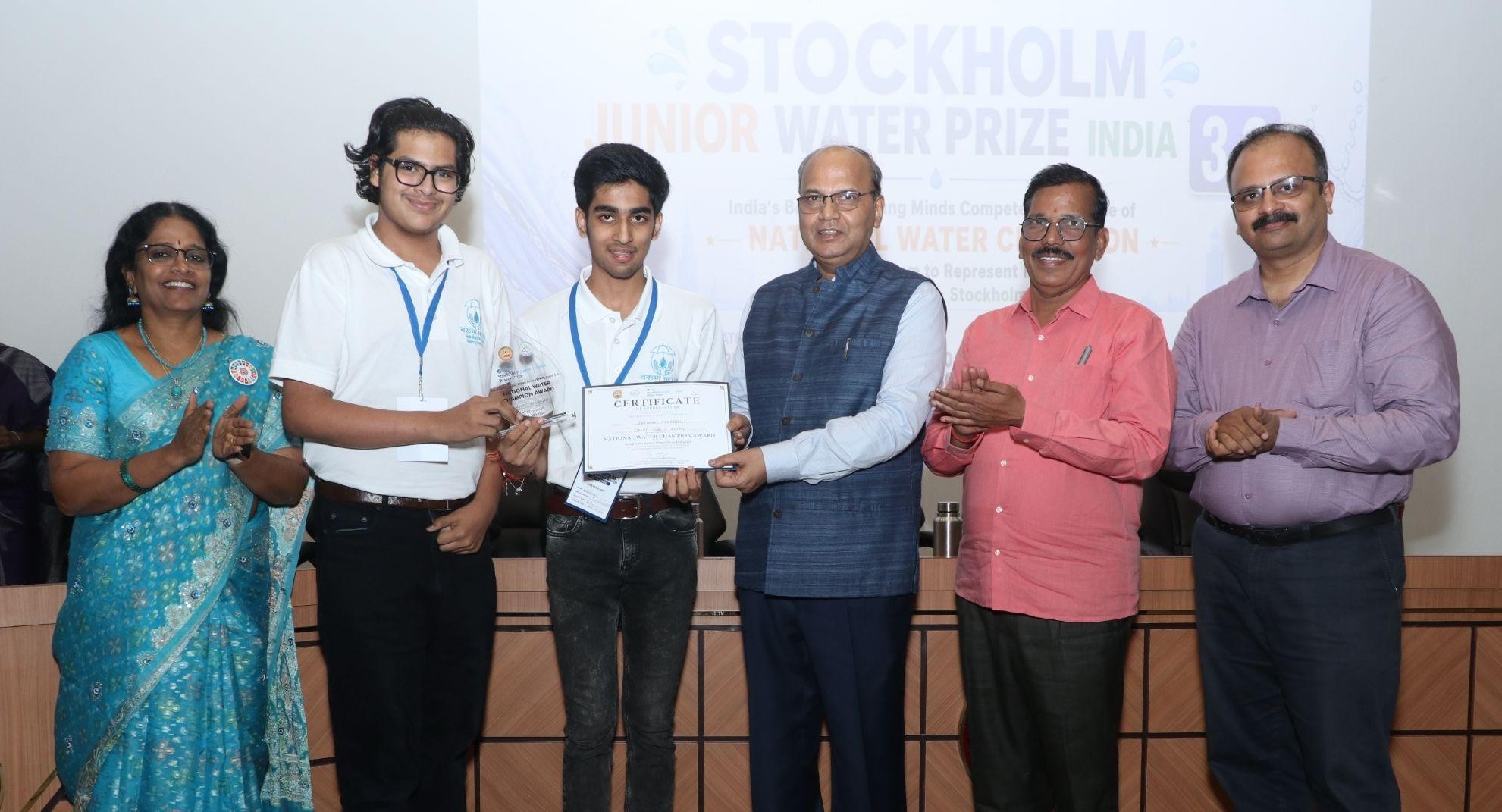
Raaghav Aggarwal and Gokarn Suri secured second place for developing VarunNetra, an integrated AI-IoT platform aimed at addressing urban water management challenges.
The system consists of three major components:
- MeghPath — AI-powered drain cleaning system
- Jal Setu — IoT-based leak and contamination detection network
- Jal Stambh — Vertical rainwater harvesting structure
Together, these systems aim to reduce water losses, improve drainage management, and enhance urban water sustainability through data-driven monitoring and citizen engagement.
FOURTH PLACE
AquaVortex — Passive Vortex Drainage Insert
Aadya Kanchany
Vidyashilp Academy, Bengaluru, Karnataka
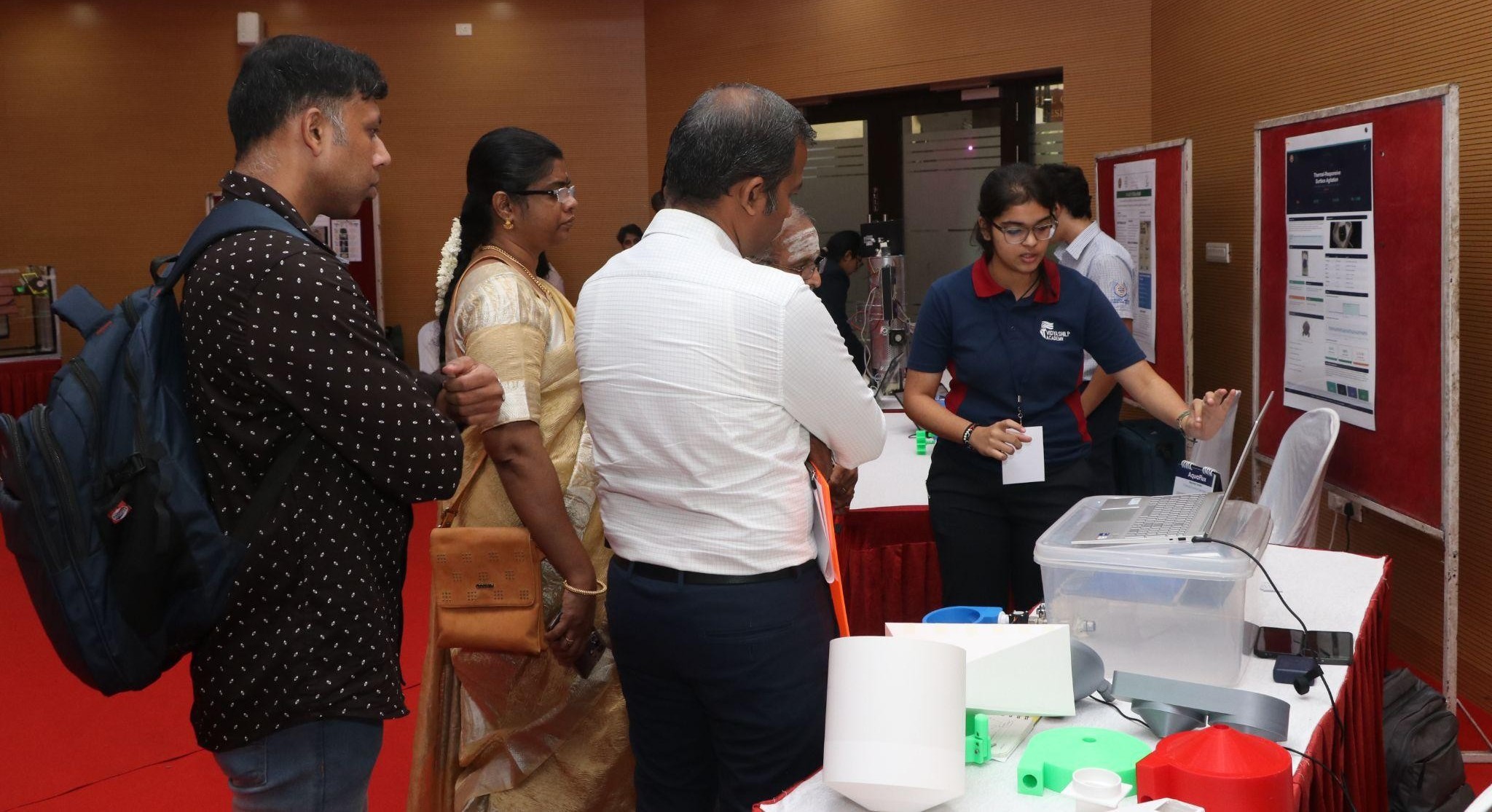
Aadya Kanchan secured fourth place for developing AquaVortex, a passive vortex-based drainage insert designed to improve stormwater discharge efficiency during urban flooding. The 3D-printed insert creates controlled vortex flow within drainage systems, significantly improving water movement without requiring electricity or mechanical components. The project demonstrated strong engineering validation through hydraulic simulations and flood-condition testing.
FIFTH PLACE
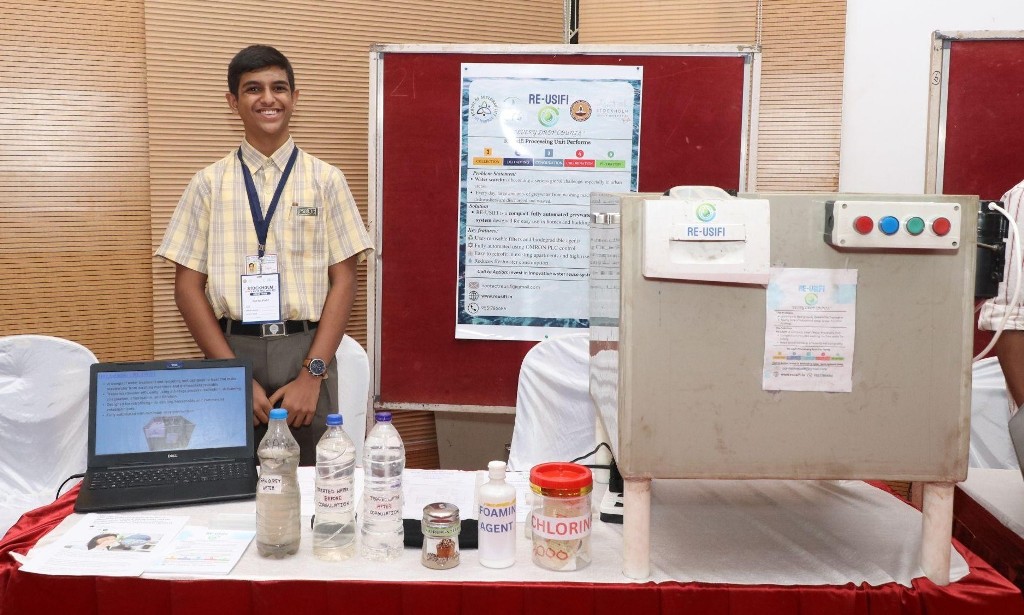
RE-USIFI — Compact Washing Machine Wastewater Recycler
Adhiban Param
PSBB School, K.K. Nagar, Chennai, Tamil Nadu
Adhiban Param secured fifth place for developing RE-USIFI, a compact household wastewater recycling system designed for washing machines and dishwashers.
The system treats greywater through a five-stage process involving collection, defoaming, coagulation, chlorination, and filtration. The treated water can then be reused for non-potable domestic applications such as toilet flushing, gardening, and cleaning.
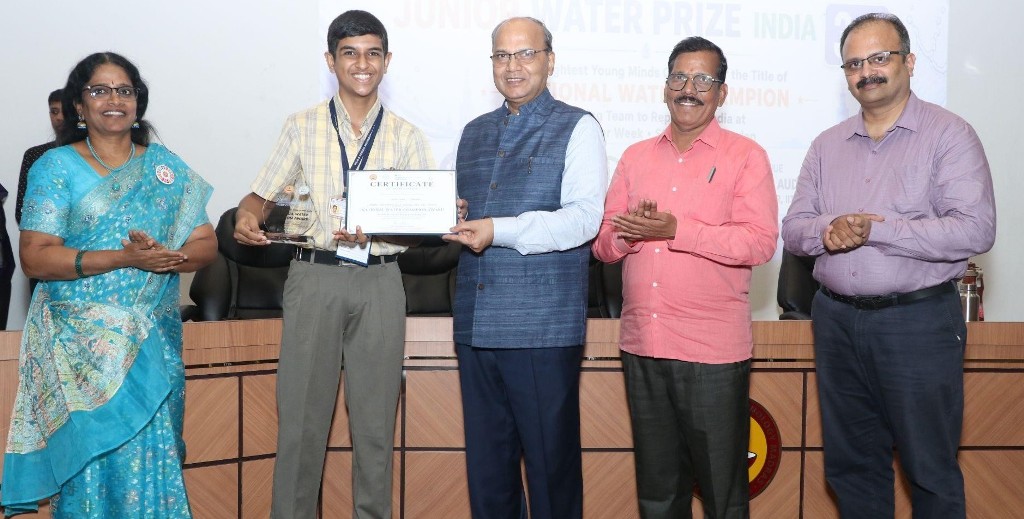
The project addresses the growing need for sustainable domestic water reuse solutions in urban households.
CONCLUSION
The Stockholm Junior Water Prize India 3.0 showcased the extraordinary potential of India’s young innovators in addressing real-world environmental and water sustainability challenges through science, engineering, and entrepreneurship.
The finalists presented practical, scalable, and impactful solutions covering atmospheric water generation, AI-enabled infrastructure management, eco-friendly filtration systems, flood mitigation technologies, and wastewater recycling.
The event highlighted the importance of youth-led innovation in shaping sustainable water solutions for the future and provided a national platform for emerging changemakers to contribute towards global environmental resilience.
“Let’s Innovate for Water. Let’s Create Impact.”